Dubrovačko oko
How Dubrovnik turned citizen reports into a city service that closes the loop
- Client
- City of Dubrovnik
- Platforms
- Web, iOS, Android
- What we did
- Product design, Web and mobile development, Legacy system migration, Hosting and support
The challenge
Municipal issues such as potholes, water leaks, broken lights and damaged walkways are some of the most common problems a city faces. Reports used to arrive by phone and e-mail, were tracked in spreadsheets, and citizens rarely heard what happened next.
Dubrovnik needed one place where residents and visitors could report a problem in seconds, where city staff and utility companies could share the work, and where everyone could see progress.
What we built
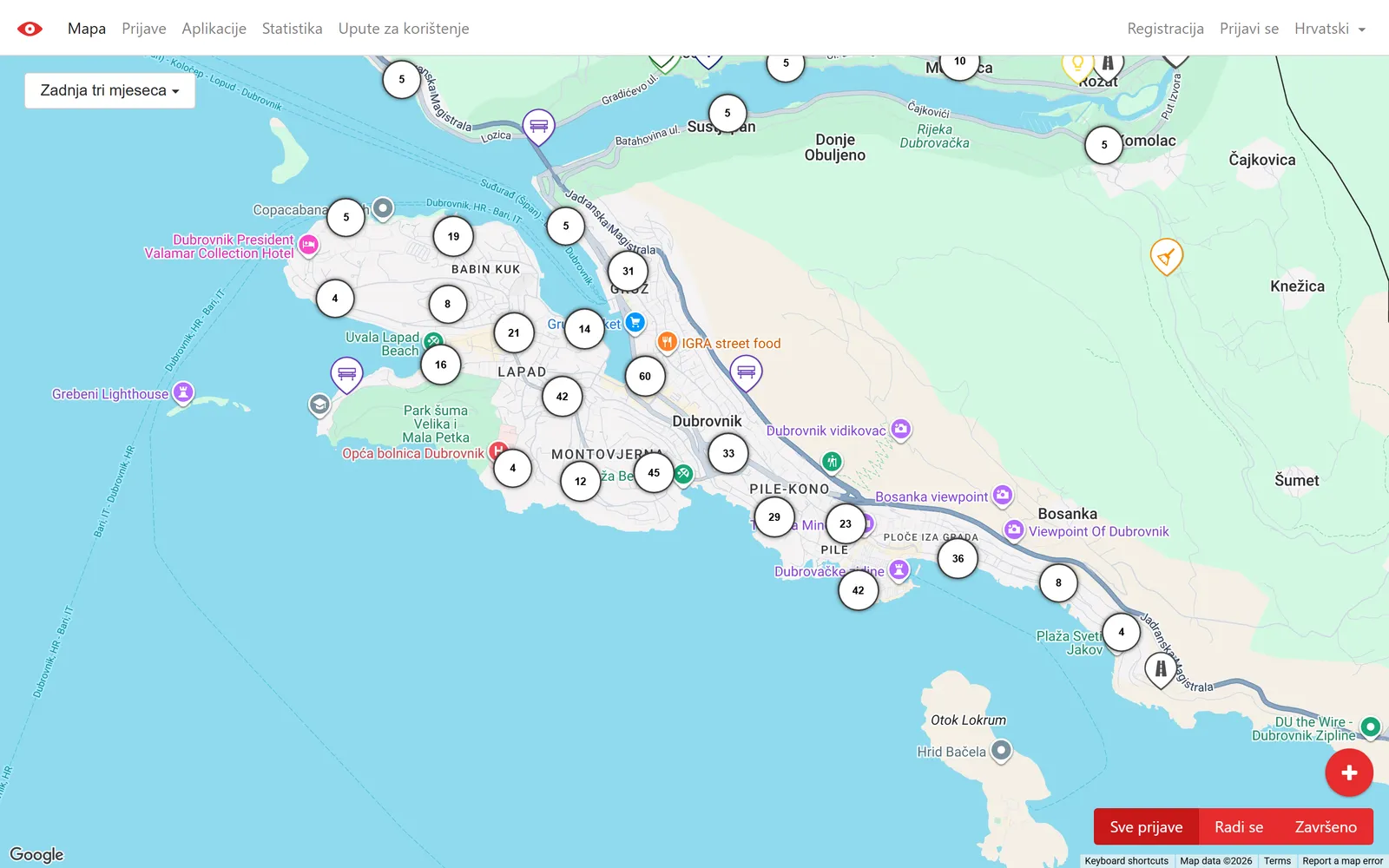
We built Dubrovačko oko: a public map and mobile app for reporting, and a workspace for the city and its institutions. A report goes from submission through review, assignment and resolution, and the reporter is notified at every step.
We are now rolling out the next generation of the platform on a modern stack. It carries over years of reports and accounts from the original system without changing a single public report number, and lets every city run its own instance with its own branding, languages, categories and service area, from the same code.
How it works
From a photo to a fixed street
Follow one report of a broken street light. Faces and number plates are blurred before the photo goes public, the city hands the report to the right institution, and the reporter hears back at every step.
A citizen reports it
A photo, a category and a pin on the map. Faces and number plates in the photo are blurred on our servers.
The city routes it
Staff review the report and assign it to the institution in charge, which updates it as the work goes on.
The reporter hears back
E-mail and push notifications tell the reporter when the report is accepted, in progress and resolved.
Key features
Report on a map
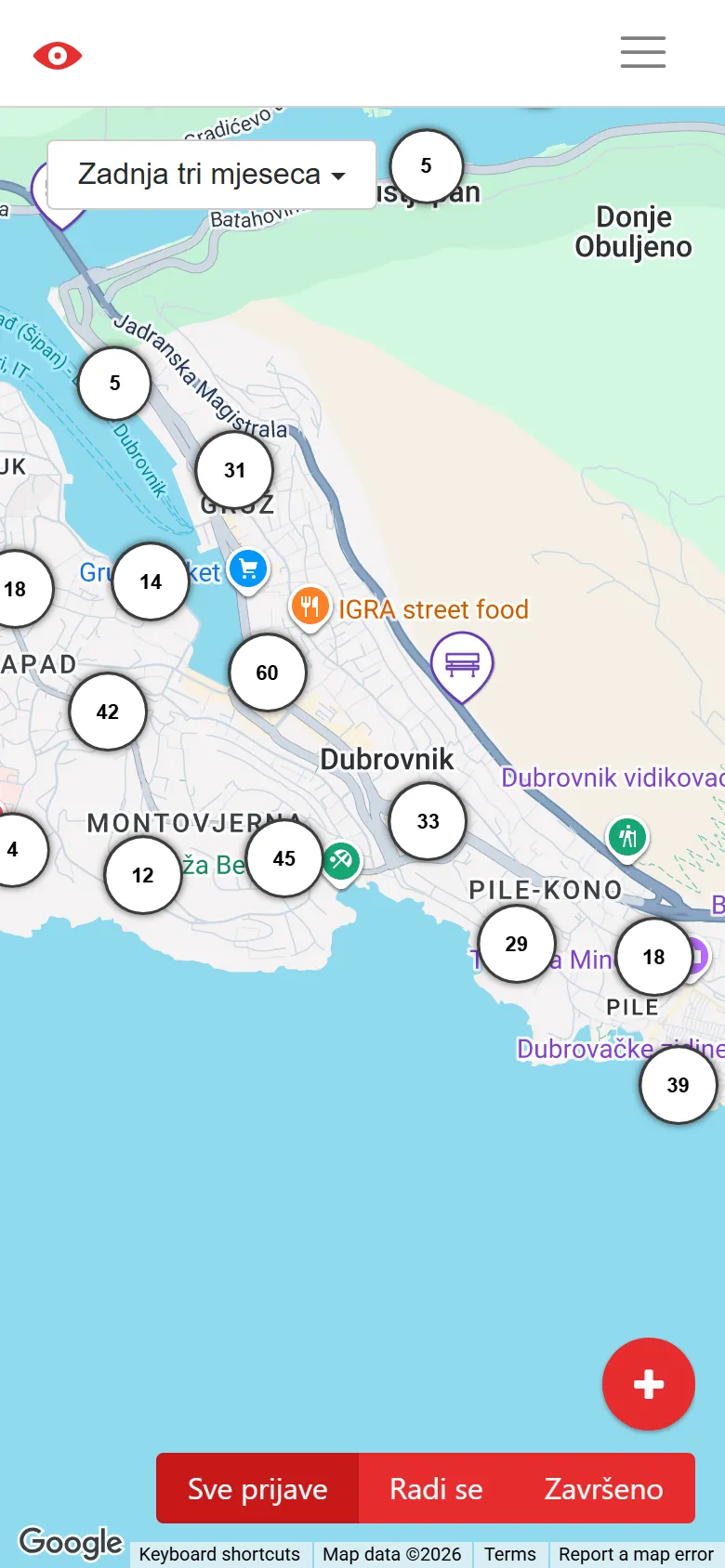
Category pins, clustering and filters. Location is checked against the city area, so reports land where they belong.
Privacy by design
Faces and number plates are detected and blurred on our servers before a photo is published. Originals are never public.
Institution workflow
Staff review, assign and transfer reports between institutions. Utility companies can update their reports through secure links, without an account.
Notifications that close the loop
E-mail, browser and mobile push notifications tell reporters when their report is accepted, in progress and done.
Statistics
Public statistics for transparency and a staff dashboard that shows where problems pile up and how fast they are solved.
For everyone, everywhere
Croatian and English, light and dark theme, installable on the home screen, and native apps for iOS and Android.
Screens
What it changed
- Fewer calls, e-mails and sticky notes: one queue for every report.
- Citizens see what happens to their report instead of wondering.
- Decisions based on data: where problems appear and how long they take.
- A product other cities can adopt without new development.
Technology
- Angular
- .NET
- PostgreSQL + PostGIS
- Microsoft Azure
- Google Maps
- ONNX Runtime
- Web Push
- Firebase